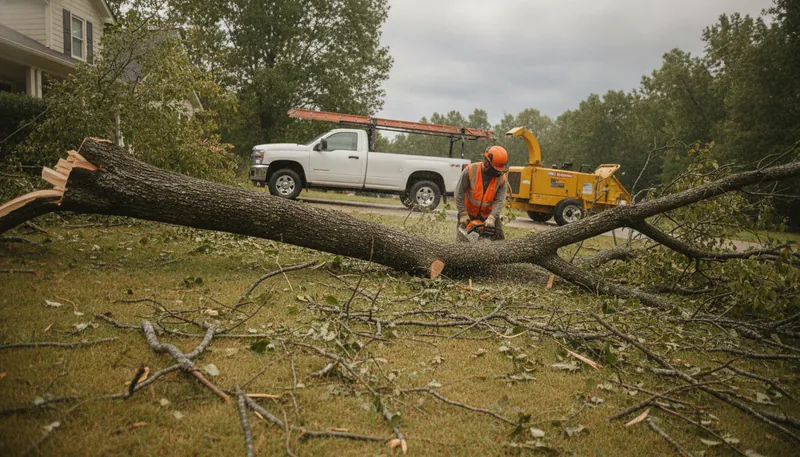
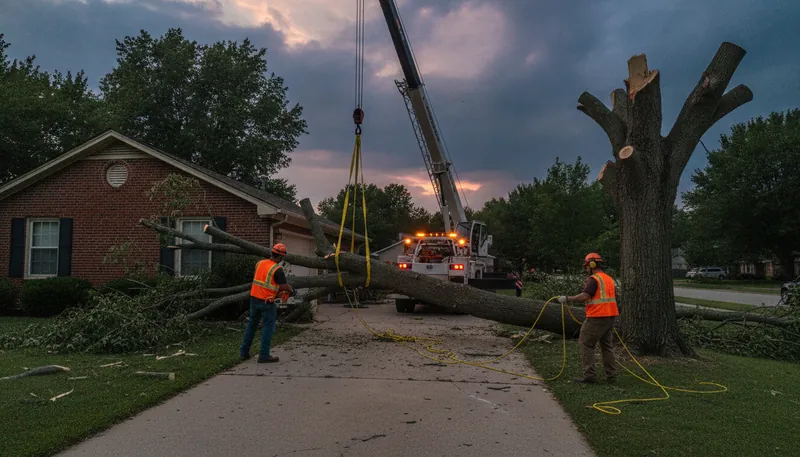
When a severe storm tears through Cobb County, the aftermath can be sudden and chaotic. A cracking sound in the middle of the night, followed by a heavy thud, is a sound no homeowner wants to hear. In those first moments, the primary concern is safety, followed immediately by the need for a rapid, effective response. The effectiveness of that response often hinges on one simple factor: proximity. For residents in Marietta, having a dedicated team physically based in the city is not a luxury. It's a critical component of immediate hazard mitigation.
The Proximity Advantage: Why a Marietta Base Matters
In an emergency, every minute counts. A tree leaning precariously on a roof or blocking a driveway requires immediate attention, and the company handling the situation must be able to deploy quickly. This is where a truly local presence makes a tangible difference. A company with a physical headquarters in the area can respond faster and more efficiently than one dispatched from another county.
A True Local Dispatch Hub
Aable John's Tree Service, Inc. operates from a physical base at 699 Shannon Dr NE in Marietta, GA. This isn't a satellite office or a post office box. It's a fully equipped operational hub. When a call for marietta emergency tree removal comes in, crews and specialized equipment are dispatched directly from this central location. This eliminates the travel time and potential delays that companies based in Alpharetta, Canton, or other surrounding areas face, especially when storm conditions make travel difficult. Being local means having crews on-site faster, assessing the situation sooner, and beginning the crucial work of securing the property without delay.
The Logistical Edge in a Crisis
Navigating a storm-ravaged area presents unique challenges. Downed power lines, blocked roads, and heavy traffic can severely hamper response efforts. A team that lives and works in Marietta possesses an intimate knowledge of the local field: the alternate routes, the traffic patterns, and the specific challenges of different neighborhoods. This local expertise allows crews to bypass obstacles and reach a property more efficiently, a logistical advantage that's a core part of providing reliable 24/7 emergency tree removal when conditions are at their worst.
Anatomy of a 24/7 Emergency Call: What Really Happens
Fast emergency response is a common promise, but the reality of what happens when a homeowner calls during a thunderstorm varies wildly between companies. A genuine emergency service is defined by its immediate, human-led process designed to address the crisis head-on from the very first moment of contact.
The First Contact: A Live Voice, Not a Machine
One of the biggest frustrations for a homeowner in distress is calling an emergency number only to reach a voicemail or an answering service that promises a callback. A good emergency tree service makes sure a live person answers the phone. At Aable John's Tree Service, Inc., this initial conversation is with someone who can immediately begin to understand the severity of the situation, providing instant reassurance and starting the assessment process without delay. There is no waiting in a callback queue while the situation potentially worsens.
Triage and Dispatch Protocol
Once contact is made, a rapid triage process begins. The operator gathers critical information to assess the level of risk:
- Is the tree on a house or other structure?
- Is it blocking the only access to or from the property?
- Are there live power lines involved?
- Is the tree unstable and threatening to fall further?
The answers determine dispatch priority: a tree on a roof takes precedence over one that has fallen harmlessly in the yard. This systematic approach ensures the most dangerous situations are addressed first, deploying crews and equipment where they're needed most urgently.
The Critical Question: "Can This Wait Until Morning?"
Identifying Immediate Hazards
Certain scenarios demand an immediate response. A tree that has partially failed but is still standing, a large branch hanging precariously over a home (a "widow-maker"), or a tree leaning on a structure are all active threats. These situations are unstable: a shift in wind or further rain can cause the tree to move, leading to catastrophic structural damage. Any tree blocking an emergency exit or access road also qualifies as a situation that cannot wait.
The Hidden Dangers of a Compromised Tree
A tree that has fallen onto a house is exerting immense, continuous pressure on the roof, framing, and foundation. Leaving it overnight can turn a repairable puncture into a major structural failure: the weight can slowly crush rafters and compromise the integrity of the entire roof system. Removing this weight as soon as possible is not just about clearing debris; it's an active step in preventing the kind of structural damage that can erode a home's value if left unaddressed.
Insider tip. Most homeowners don't realize that a tree leaning on a roof acts like a constant lever. Every gust of wind can cause it to shift, grinding against shingles and sheathing while stressing the structural supports. The initial impact is often just the beginning of the damage: the prolonged pressure is what can lead to a collapse.
The Right Equipment for a Complex Job
Emergency tree removal, especially in residential areas, is rarely as simple as cutting up a fallen log. It requires precision, power, and a deep understanding of physics to execute safely. The right equipment is not just helpful. It's essential for protecting property from additional harm during the removal process.
Crane-Assisted Removal in Tight Spaces
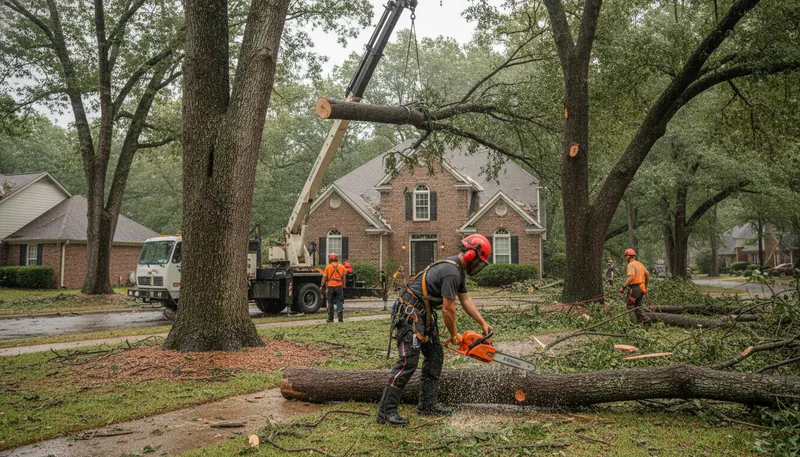
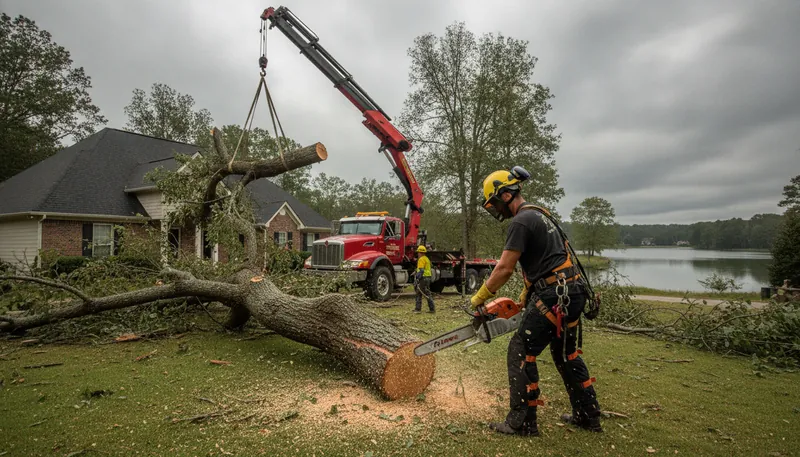
When a large oak or pine falls on a house in a tight Marietta neighborhood, there is often no way to remove it piece by piece without causing more damage. This is where specialized equipment, like a crane, becomes indispensable. Aable John's Tree Service, Inc. maintains a fleet of four cranes specifically for these scenarios. A crane allows the operator to lift massive sections of the tree vertically, up and away from the structure, before lowering them safely in a designated zone: preventing the dragging of heavy logs across a vulnerable roof or yard, a common cause of secondary damage.
Beyond the Saw: Rigging and Safety Protocols
Professional tree removal is a highly technical discipline. Being a TCIA Accredited company means adhering to stringent national standards for safety and operations. This involves complex rigging techniques to control the descent of large limbs, clear communication between the ground crew and the climber or crane operator, and a site safety plan established before the first cut is ever made. This methodical approach ensures the work is done correctly and safely, minimizing risk to both people and property.
Expert insight. After 40+ years in this business, Aable John's Tree Service has learned that the most dangerous part of an emergency job is often complacency. A professional crew reassesses the stability of the tree and surrounding environment constantly throughout the removal process. A tree under tension can snap back unexpectedly, and a professional always respects that potential energy.
Once the tree itself is down, the job isn't over: a fallen tree usually means a yard full of limbs, logs, and brush. Our crews handle storm debris removal as part of the same call, so the property is safe and usable again, not just cleared of the immediate hazard.
Restore Your Safety
In the wake of a storm, the primary goal is to make the property safe again. This involves more than just removing a fallen tree. It requires a rapid, professional, and well-equipped response from a team that understands the urgency of the situation. Having a truly local, credentialed, and experienced tree service contractor is the key to navigating a stressful event with confidence and minimizing further risk to a home and family.
If you have a tree emergency right now, get in touch or call (770) 218-0068. Estimates are free and there is no obligation.
Once the immediate hazard is cleared, it's worth having the rest of the property looked at: a tree risk assessment can flag the next weak tree before it becomes the next emergency, and our guide to preparing trees for severe weather covers the proactive steps that reduce storm damage in the first place.
Why Aable John's
- 24/7 emergency response: call (770) 218-0068 when a tree comes down
- True local dispatch: crews and equipment deploy from our Marietta base at 699 Shannon Dr NE
- 4 cranes and full rigging equipment: large removals handled safely in tight residential yards
- Our arborists: trained to assess risk and stability before the first cut
- TCIA Accredited company: independently audited safety and technical standards
- 40+ years in Cobb County: four decades of Marietta, Kennesaw, and East Cobb storms
- Free estimates: we come out, assess the situation, and give you a straight answer
Frequently asked questions
What tree situations count as a true emergency?
A tree that has partially failed but is still standing, a large branch hanging precariously over a home (a "widow-maker"), or a tree leaning on a structure are all active threats. These situations are unstable: a shift in wind or further rain can cause the tree to move, leading to catastrophic structural damage. A tree blocking an emergency exit or the only access road to a property also qualifies as something that cannot wait until morning.
Why can't a tree on my roof just wait until morning?
A tree that has fallen onto a house is exerting immense, continuous pressure on the roof, framing, and foundation. Leaving it overnight can turn a repairable puncture into a major structural failure: the weight slowly crushes rafters and compromises the integrity of the entire roof system. It acts like a constant lever: every gust of wind causes it to shift, grinding against shingles and sheathing while stressing the structural supports. Removing the weight quickly is an active step in preventing further, more expensive damage.
Do you actually answer the phone at 2 a.m., or do I get a callback?
A live person answers, regardless of the time or weather. There is no voicemail, no answering service, and no waiting in a callback queue while the situation potentially worsens. That first call starts a rapid triage, is the tree on a structure, is it blocking access, are power lines involved, is it still unstable, and the answers determine dispatch priority.
How fast can a crew actually reach my property in Marietta?
We operate from a physical base at 699 Shannon Dr NE in Marietta, not a satellite office or a P.O. box. Crews and equipment dispatch directly from that location, which cuts out the travel time a company based in another county would face, especially when storm conditions have roads blocked or backed up.