Tree Fertilization in Marietta & Cobb County
Thin, pale or struggling trees? Georgia's clay soil is often compacted and nutrient-depleted. We assess your soil first, then feed the roots directly with deep root fertilization.
- TCIA Accredited
- Google Guaranteed
Soil first
Aable John's provides deep root tree fertilization for Marietta and Cobb County property owners whose trees are looking thin, pale or not growing the way they should.
Our arborists assess your soil conditions before recommending a treatment, so your trees get what they actually need rather than a generic off-the-shelf mix.
Warning signs
Signs your trees need fertilization
Most trees in Marietta don't need fertilization every year. Healthy trees in undisturbed soil do fine on their own. The ones that benefit most are growing in conditions that have compromised the soil around them.
- Pale or yellowing leaves During the growing season, often a sign of nitrogen deficiency or a pH problem that's blocking nutrient uptake.
- Small leaves, short twig growth A tree putting out less new growth than it should is usually stressed at the root level.
- Dieback at the branch tips When the outer edges of the canopy start dying back, soil health is often a contributing factor.
- Thin, sparse canopy Gradual thinning over several years on a tree that used to be full points to a soil problem rather than a disease.
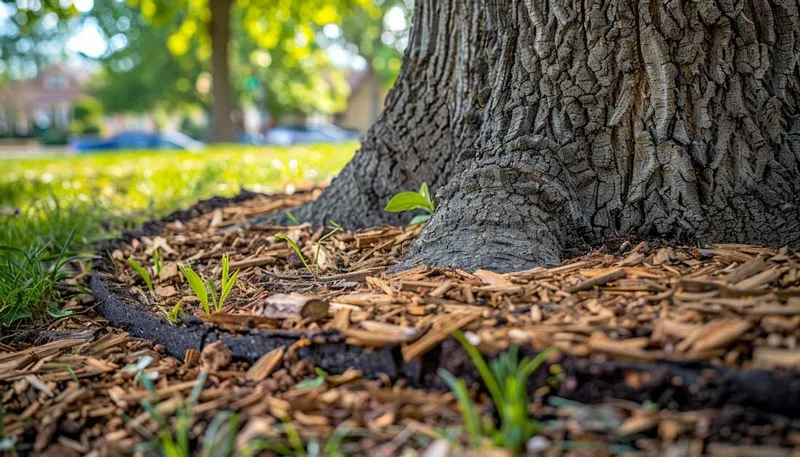
- A recently developed lot Construction strips topsoil, compacts the root zone with heavy equipment and leaves trees growing in subsoil that lacks the organic matter and biology of healthy ground.
Dogwoods and redbuds, two of the most common ornamental trees in Marietta yards, are shallow-rooted and among the first to show stress when Cobb County's clay soils get compacted or pH falls out of range. If yours are struggling, soil quality is the first place to look.
How it's done
How deep root fertilization works
-
Assess the tree and soil
Before any treatment, our arborists assess the tree and soil conditions. Different species have different requirements, and a stressed tree in compacted clay needs a different approach than a young tree on a newly planted lot.
-
Probe the root zone
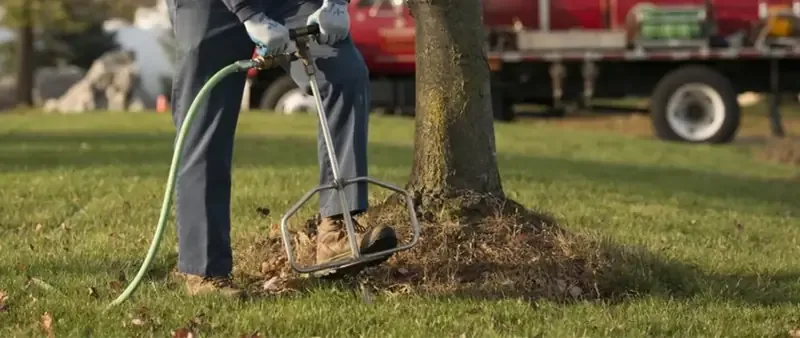
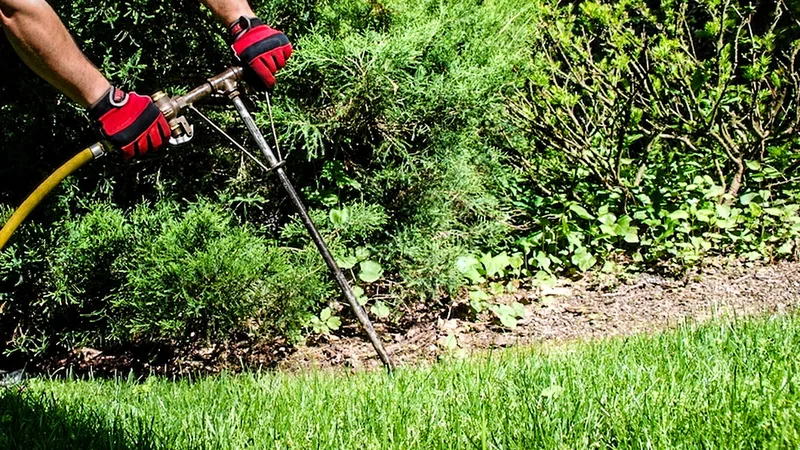
A probe is inserted 8–12 inches into the soil at multiple points around the tree's drip line.
-
Inject under pressure
Fertilizer is injected directly into the root zone under pressure. It also fractures the surrounding soil slightly, improving aeration and drainage around the roots. We don't apply a standard mix and call it done.
Local soil
Why Georgia's clay soils create fertilization challenges
Cobb County's red clay is dense, poorly draining and easily compacted, especially on residential lots where decades of foot traffic, mowing and construction have pressed the soil into a layer roots struggle to penetrate.
- Compacted clay
- Dense and poorly draining, pressed into a layer that roots struggle to penetrate.
- Deep root injection What we do
- It bypasses the compaction layer entirely. Spreading fertilizer on the lawn around a tree often doesn't solve the problem, because the compaction layer keeps it from reaching the root zone where it's needed.
- Low-pH clay
- Clay soils tend to run acidic in Georgia, creating pH imbalances that lock out nutrients even when they're present. A tree in low-pH clay may be surrounded by nitrogen it can't absorb.
Timing
Best time to fertilize
For most trees in Georgia's climate, late fall through early spring (November to March) is the ideal window. Fertilizing before the spring growth flush gives roots time to absorb nutrients before the tree breaks dormancy and pushes new growth.
Avoid midsummer applications. Fertilizing a tree that is already stressed by heat and drought adds to the problem rather than solving it.
Exceptions
Know the exceptions
- Dogwoods and flowering ornamentals: fertilize in early spring just before bud break, not after they've leafed out.
- Newly planted trees: wait at least one full growing season. The root system needs to establish before you start pushing growth.
- Trees with disease or pest damage: fertilize after the underlying problem is addressed, not before. Excess nitrogen on a stressed tree can make conditions worse.
Local knowledge
Fertilization across Cobb County
 East Cobb
's older established lots often have compacted soil from decades of use. Mature oaks and sweetgums on these properties are common fertilization candidates when they start showing canopy thinning.
East Cobb tree service →
 North and West Cobb
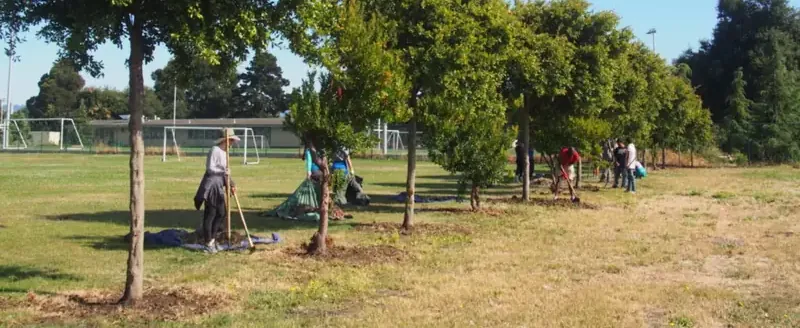
Newer developments in North Cobb and West Cobb frequently have construction-disturbed soil that leaves trees struggling in subsoil with poor nutrient availability.
West Cobb tree service →
FAQ
Tree fertilization questions
Don't see yours? Call and ask. A real person picks up.
Call (770) 218-0068When is the best time to fertilize trees in Georgia?
Late fall (November) through early spring (March) is the ideal window for trees in Marietta and Cobb County. Fertilizer applied before spring growth flushes gives roots time to absorb nutrients before the tree breaks dormancy. Avoid fertilizing in midsummer heat, which can stress trees rather than help them.
How often should trees be fertilized?
Established trees in Marietta's soil generally need fertilization every 2–3 years. Young, recently planted, or stressed trees may benefit from annual feeding. A soil test is the most reliable way to determine what your trees actually need.
What type of fertilizer do trees need in Cobb County?
Georgia's clay-heavy soils often lack nitrogen and can have pH imbalances that limit nutrient uptake. A slow-release, nitrogen-rich fertilizer combined with a soil amendment to correct pH typically works best. Aable John's assesses soil conditions before recommending a treatment.
Can over-fertilizing harm my trees?
Yes. Excessive nitrogen causes a burst of weak, fast growth that stresses the tree and makes it more susceptible to pests and disease. It can also burn roots and cause leaf scorch. Aable John's uses measured, targeted applications to avoid these problems.
Why Aable John's
Why Marietta homeowners call us for tree fertilization
- 40+ years in businessServing Marietta and Cobb County since the late '80s.
- Straight answersNo pressure and no upselling.
- Deep root injectionGets past Cobb County's clay compaction layer to where roots actually need it.
- Google GuaranteedPre-screened and background-checked by Google.
- Free estimatesOn-site and no obligation.
- Free estimatesNo charge to come out and assess your trees and soil.
Reviews
What customers say about our tree care
More tree care
Related services
-
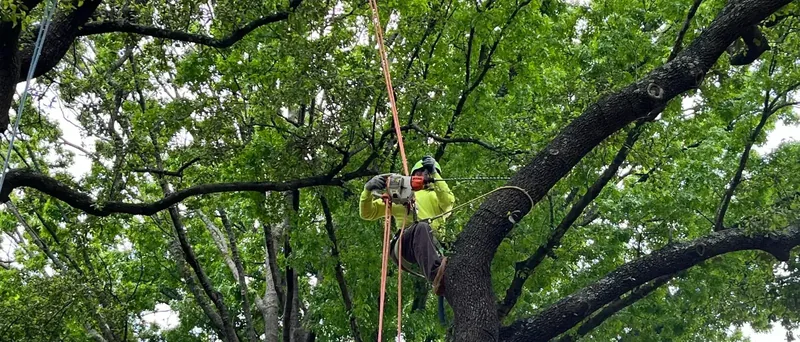
Tree Trimming
Clearance, deadwood and shaping for healthy trees.
-
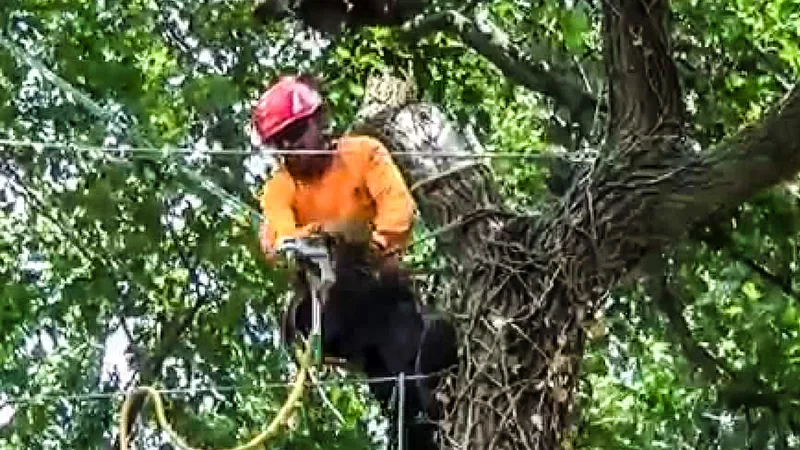
Tree Cabling
Flexible steel cables in the canopy to support heavy limbs and weak unions.
-
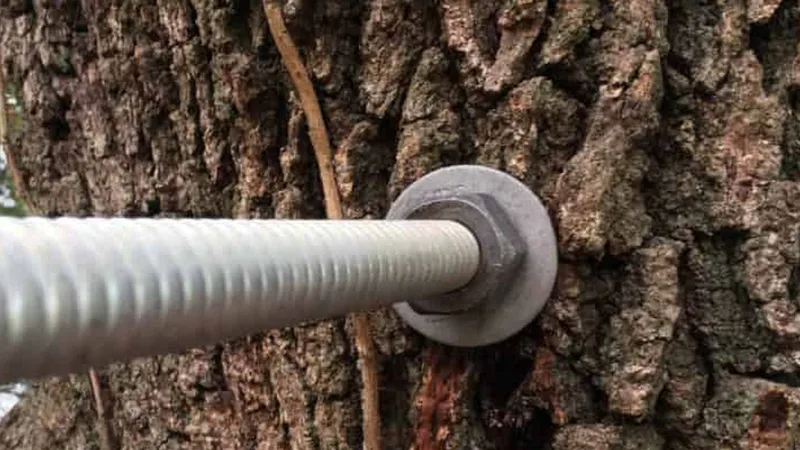
Tree Bracing
Rigid rods through a cracked or split trunk to hold the wood together.

Service areas
Tree fertilization across metro Atlanta's northwest side

Free estimate
Get a free tree fertilization assessment
Trees looking thin or struggling? Call John at (770) 218-0068. We'll look at the trees and the soil and give you a straight answer.
- Free on-site estimates
- A straight answer, no pressure
- Free on-site assessments